An architecture for acting on events
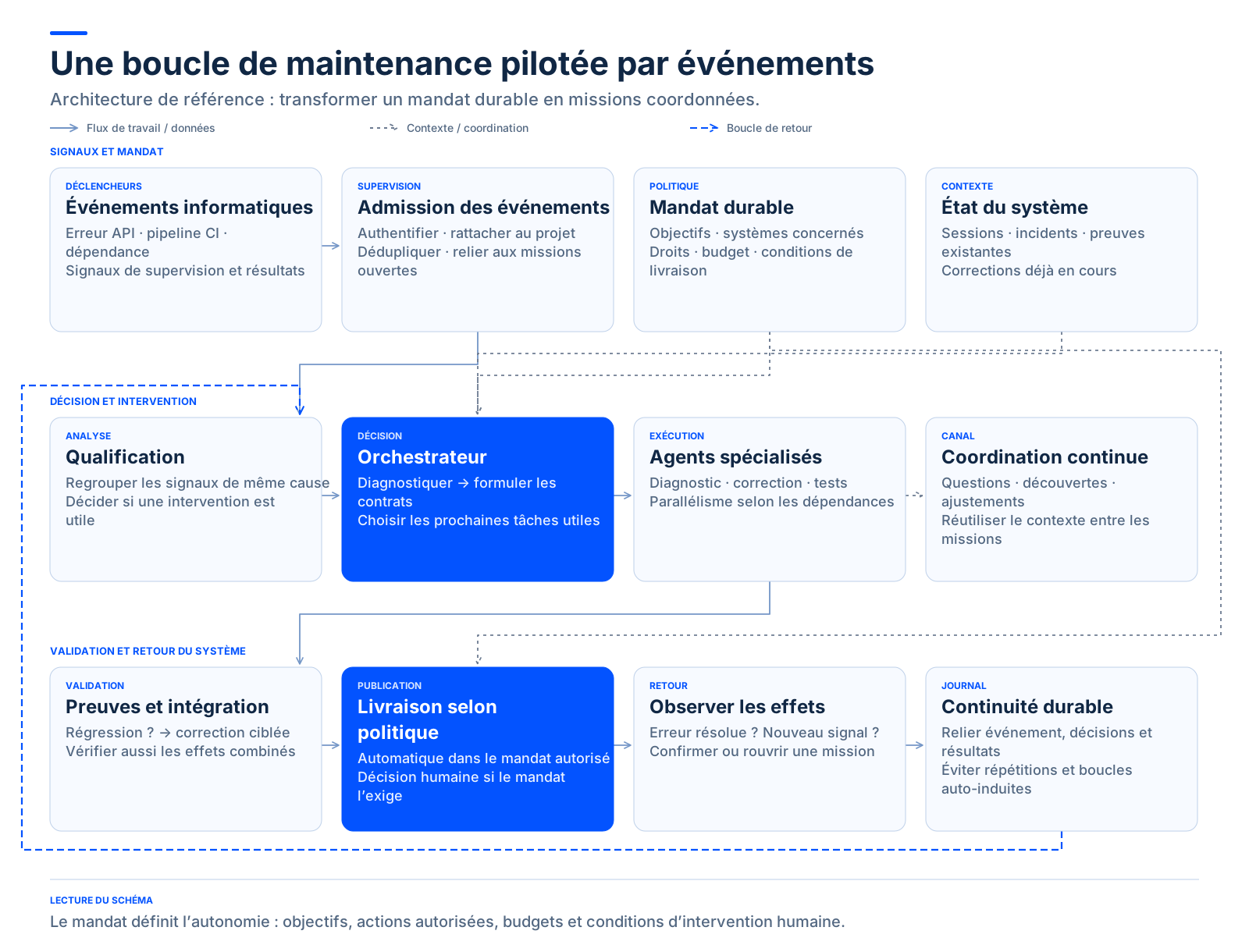
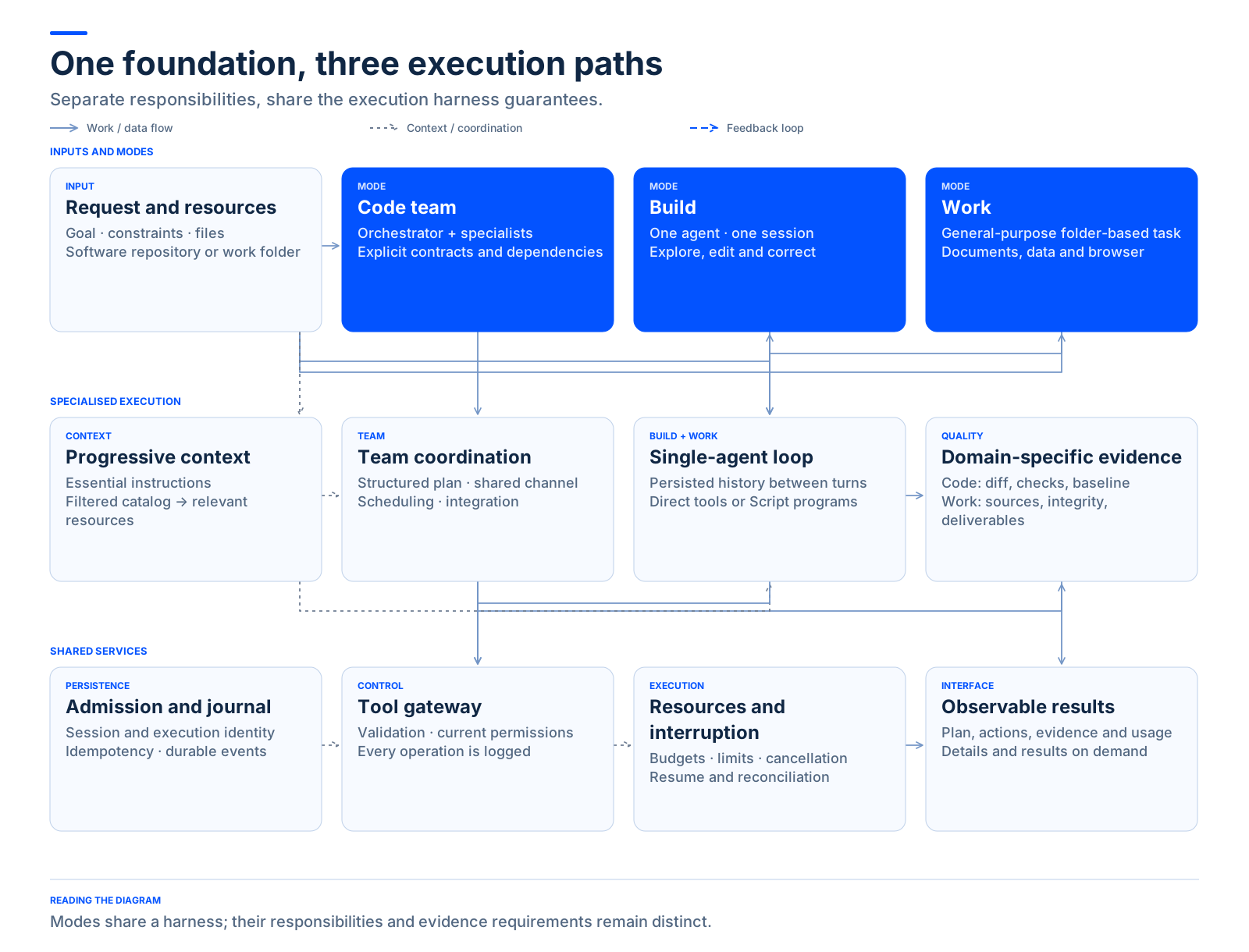
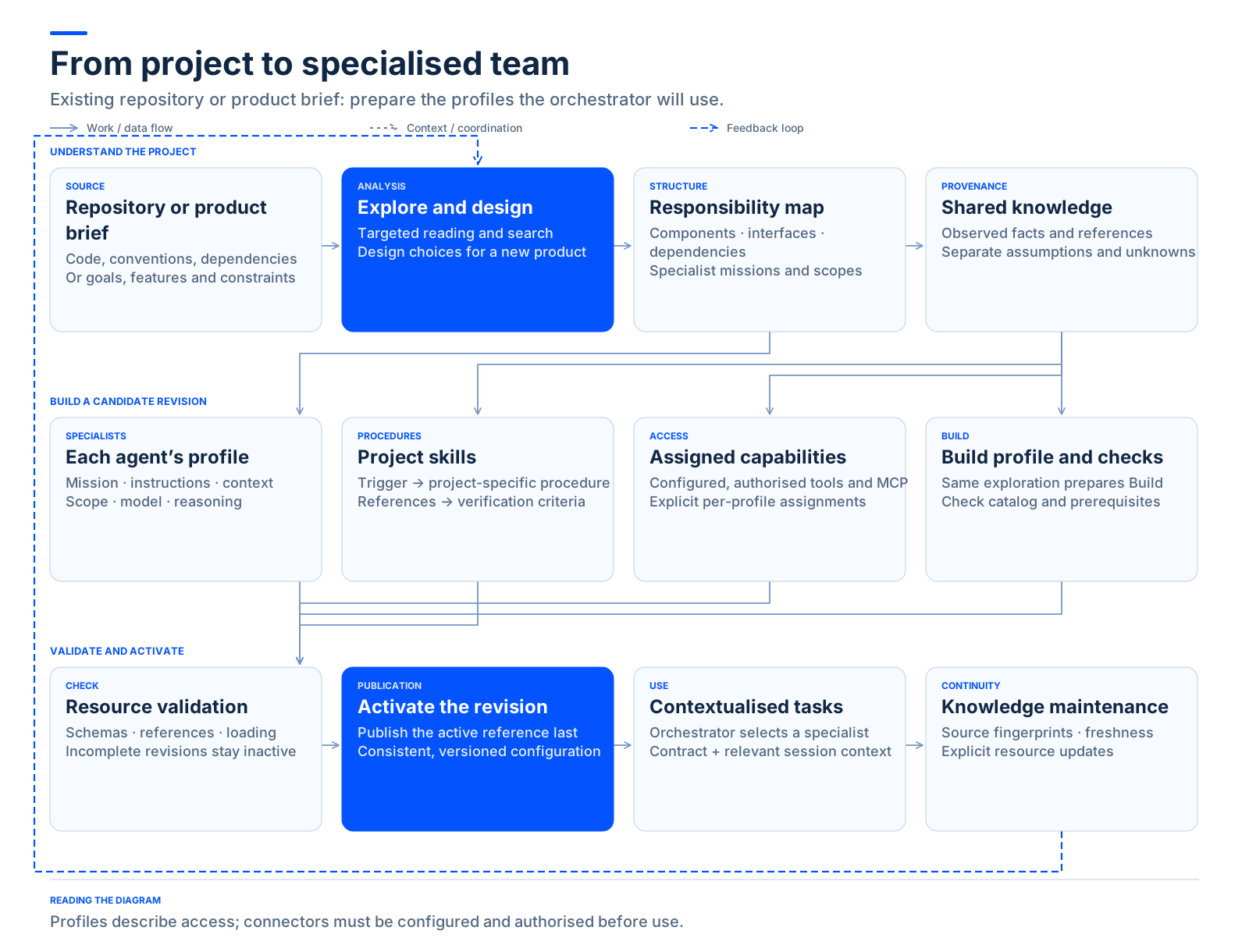
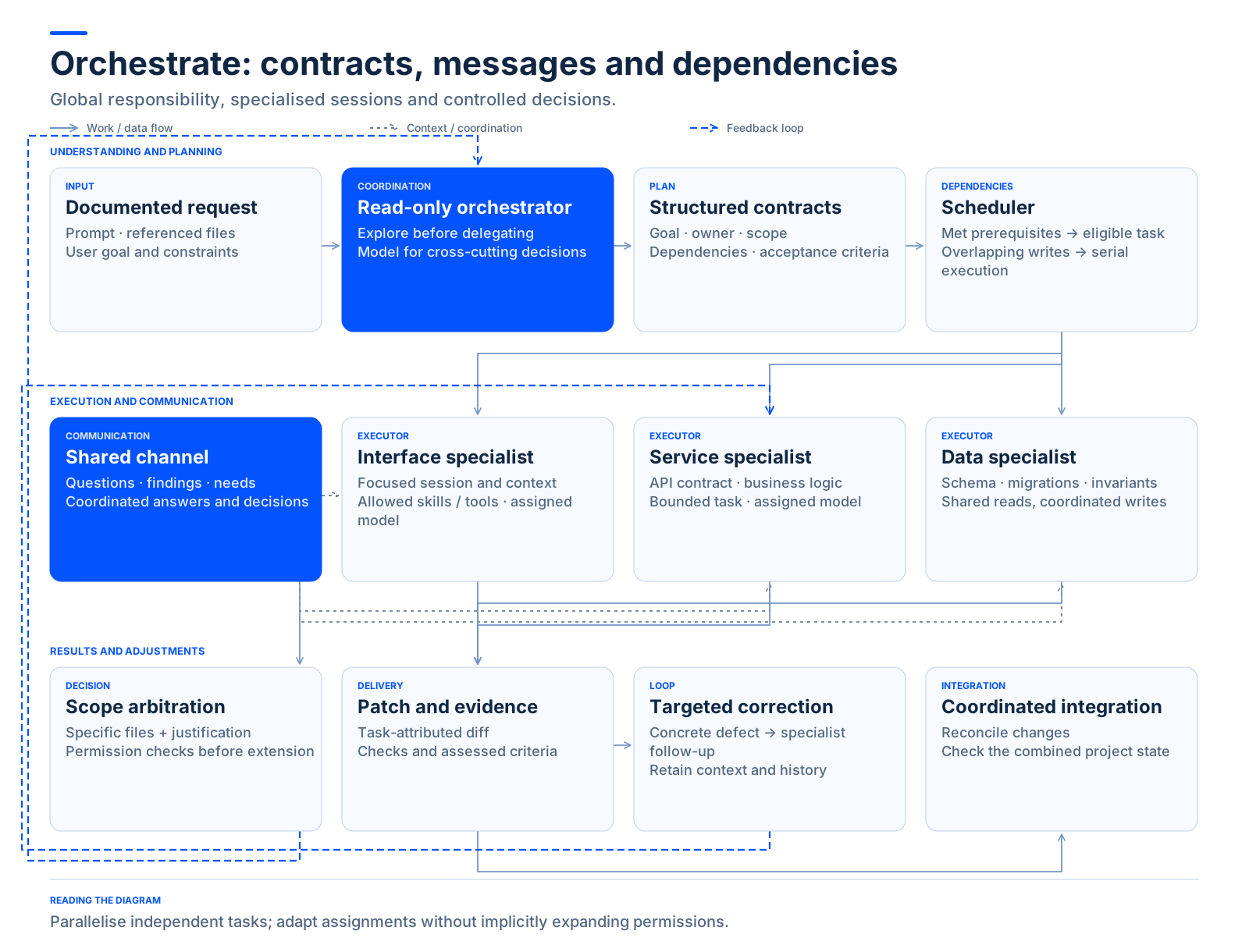
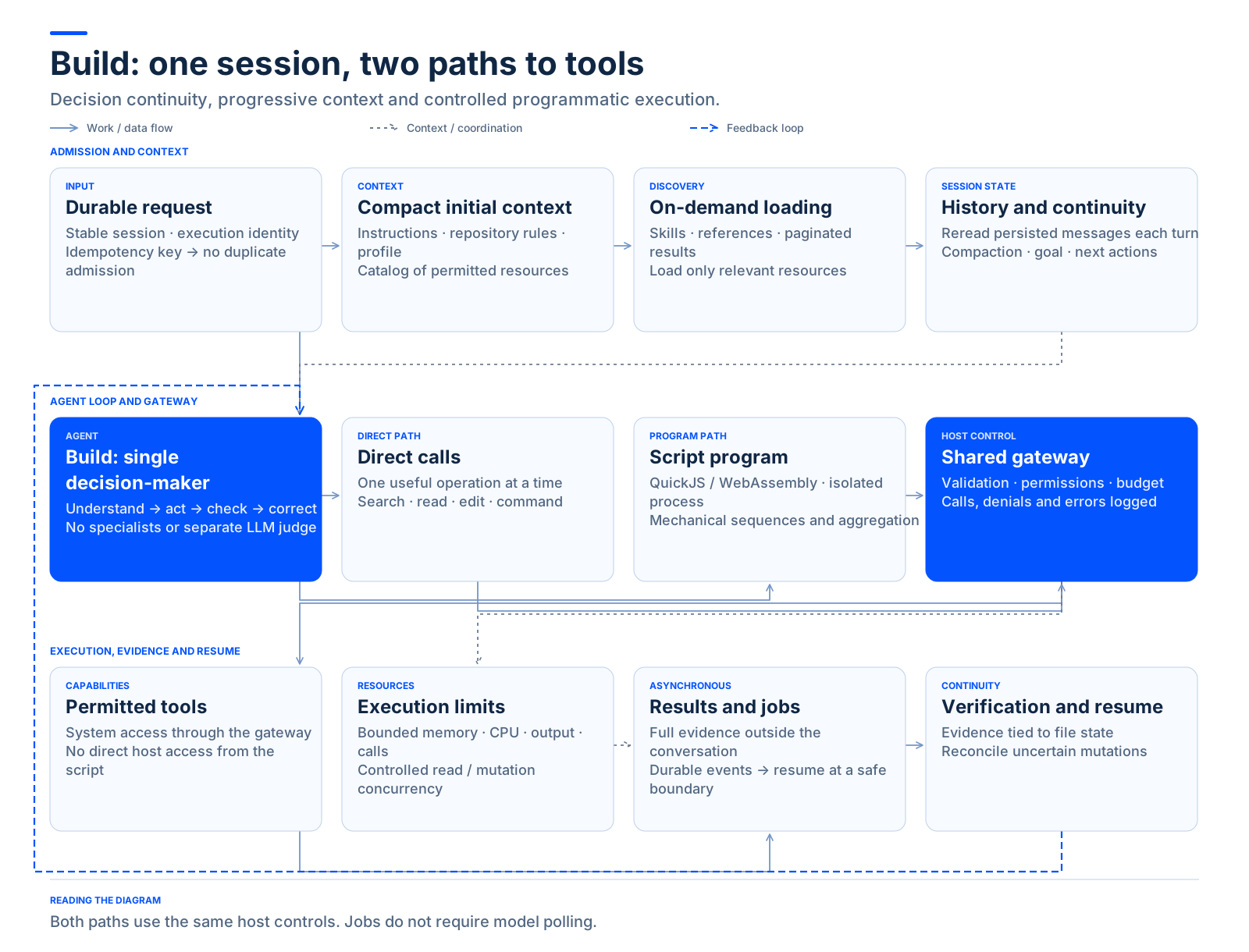
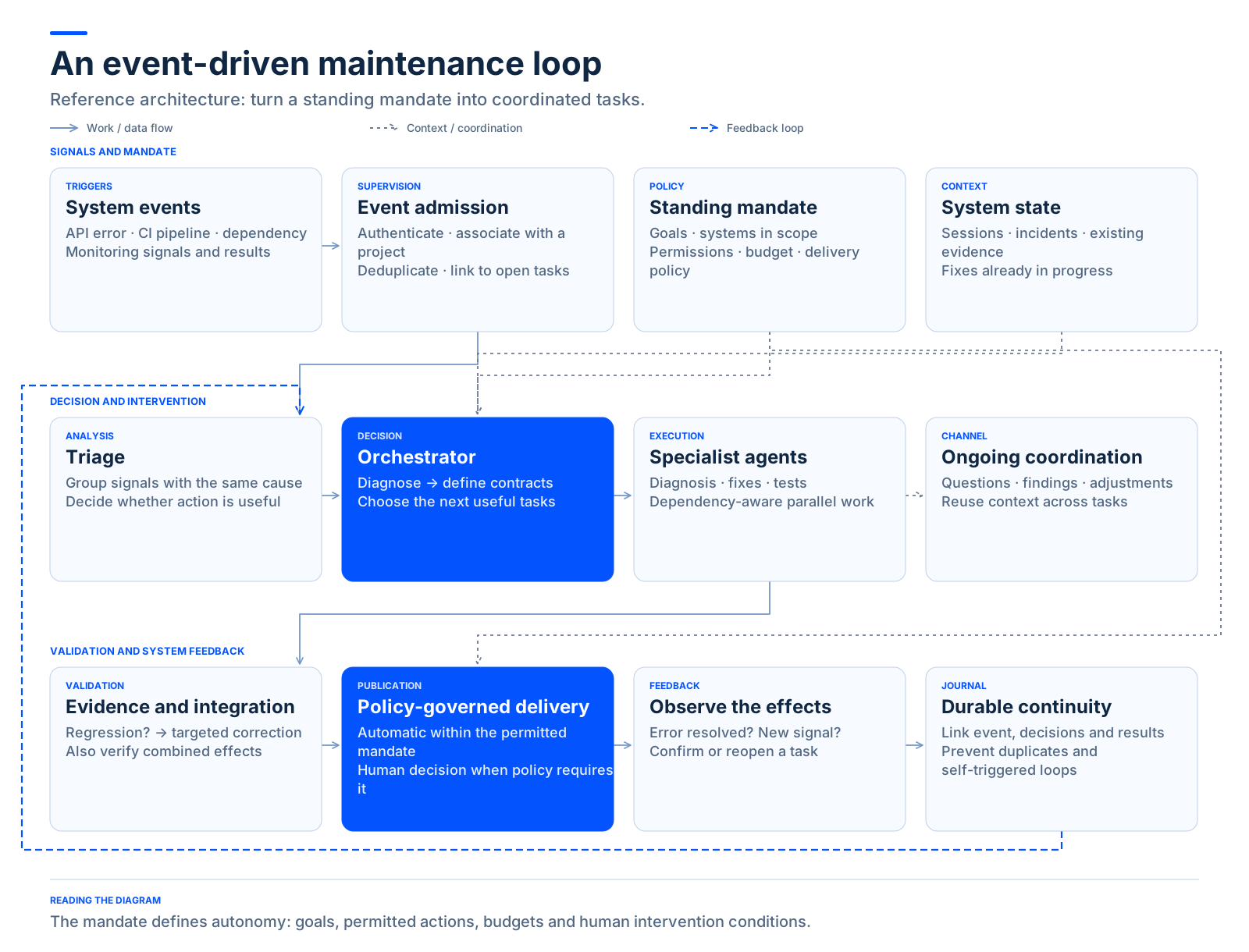
Project knowledge, coordination and persisted execution provide the foundations for broader autonomy in Uly Code. A mission could then start with an event in the computing environment: a failed pipeline, an application anomaly, a security alert or a changed dependency.
In a connected architecture, a supervision layer could receive the signal, check its origin, associate it with the project and compare it with open missions. The orchestrator would then determine the appropriate intervention under a mandate: systems to monitor, objectives to maintain, permitted actions and limits to respect.
It could group alerts with a common cause, avoid duplicating a correction already underway and turn an observed problem into executable tasks.
Events that can open a mission
Pipeline failure
Application anomaly
Security alert
Dependency change
Observe→Understand→Intervene→Verify→Reassess
The loop becomes: observe, understand, organise an intervention, verify its effect and reassess the situation.
A rise in errors on an API route, for example, could trigger an investigation: analysing logs, reviewing recent changes and finding a reproduction. The orchestrator would assign the diagnosis to a specialist, then coordinate the fix and tests. An operating policy could permit automatic delivery of changes that satisfy the defined conditions.
A dependency alert could lead to identifying its uses, preparing an update and adapting incompatible components. A pipeline failure could be classified as a regression, an unstable test or an environment outage, then routed to an intervention addressing the observed cause.
This autonomy can span multiple successive sessions. One event opens an investigation; a result unblocks a correction; a later observation confirms its effect or prompts another attempt. Continuity rests on persisted state, relationships between missions and recorded evidence.
The orchestrator could thus determine the next tasks needed to achieve the assigned objective. The user defines the system’s responsibility and rules of intervention without restating every step. Certain kinds of maintenance could be carried through end to end within established permissions, budgets and success criteria.